3 Days in Varanasi: A Spiritual and Photographic Journey

Varanasi, also known as Kashi or Benares, is a city steeped in history and spirituality, drawing pilgrims and photographers alike. As one of the oldest continuously inhabited cities in the world, it exists as a vibrant, chaotic, and profoundly moving tapestry of life and death, woven along the sacred banks of the River Ganges. This article offers a structured 3-day itinerary designed to immerse you in the heart of Varanasi, capturing its essence through both spiritual encounters and stunning photography. Whether you’re a seasoned traveller seeking spiritual enrichment or a photography enthusiast eager to capture the soul of India, this guide provides valuable insights and practical tips. Prepare to be captivated by the city’s rich tapestry of spirituality, culture, and history, all while honing your photographic skills.
Day 1: Immersion in the Ghats and Old City
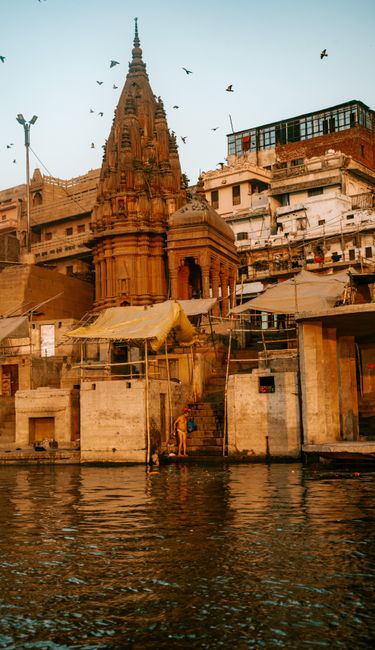
The first day is dedicated to diving headfirst into the very elements that define Varanasi: the ancient ghats that line the river and the bewildering, timeless maze of the old city. It’s a day of sensory overload, spiritual awakening, and unparalleled photographic opportunities.
Morning: Sunrise Boat Ride on the Ganges
Begin your day before dawn and make your way to the river. Begin your day with a serene boat ride along the Ganges, witnessing the magical sunrise that bathes the ghats in golden light. As your wooden boat is rowed gently along the water, the city awakens in a symphony of colour and devotion. This is the quintessential Varanasi experience, offering a perspective that is both panoramic and deeply intimate.
From the water, the photographic opportunities are endless. Capture the vibrant colours of the ghats, the silhouettes of pilgrims performing their morning rituals, and the ethereal beauty of the rising sun. Use a longer lens to isolate individuals in moments of prayer or a wide-angle lens to capture the grand sweep of the riverfront. Pay close attention to Dashashwamedh Ghat, the city’s main and most spectacular ghat; Manikarnika Ghat, the primary cremation ghat where the cycle of life and death is starkly visible; and Assi Ghat, a popular spot for pilgrims and a hub for spiritual activity.
The Ganges, or Ganga Ma (Mother Ganga), holds immense significance in Hinduism. It is considered a sacred river goddess, and its waters are believed to cleanse sins, purify the soul, and offer moksha (liberation from the cycle of rebirth). As described in ancient Hindu scriptures like the Puranas, the river is a central pillar of faith, drawing millions to its banks to bathe, pray, and perform last rites.

Afternoon: Exploring the Old City and its Temples
After the boat ride, disembark and wander through the narrow, winding lanes of the Old City. This is a maze of ancient buildings, hidden temples, and bustling markets that feels unchanged by time. The alleyways, or galis, are too narrow for cars, creating a pedestrian world where cows, pilgrims, and locals navigate a shared space.
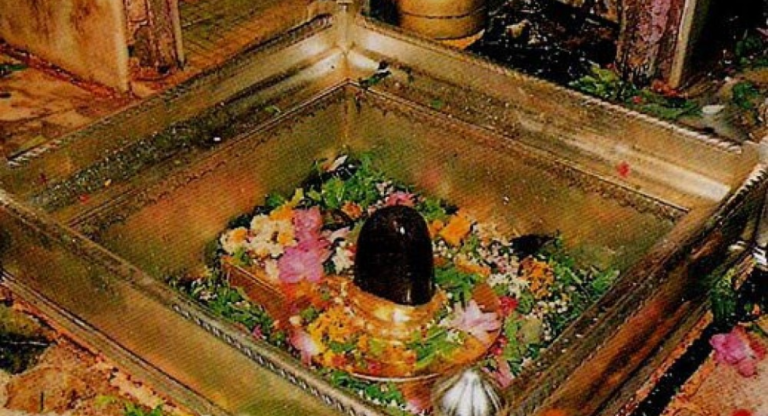
Your exploration should include visits to several key temples. Visit the iconic Kashi Vishwanath Temple, dedicated to Lord Shiva, the city’s presiding deity. While non-Hindus may not be permitted inside the main sanctum, the energy and devotion surrounding it are palpable. The temple has been rebuilt several times throughout history, with its current magnificent gold-plated spires dating back to its reconstruction in 1780 by the Maratha queen Ahilyabai Holkar. Nearby, you’ll find the Annapurna Temple, dedicated to the goddess of food, and the Durga Temple, famous for its striking red colour and its resident monkeys.
For photographers, the Old City is a treasure trove. Capture the essence of Varanasi’s street life, from the colourful vendors selling flowers and sweets to the intricate architecture of the ancient buildings. Look for moments of quiet contemplation, the chaos of daily commerce, and the textures of weathered walls and ancient doorways.
Evening: Ganga Aarti Ceremony at Dashashwamedh Ghat
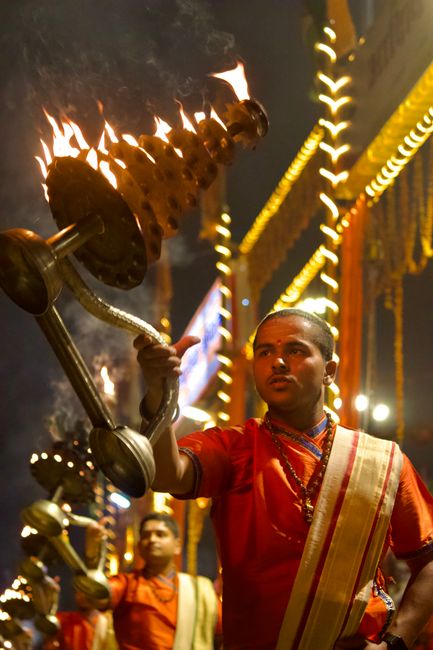
As dusk settles, make your way back to Dashashwamedh Ghat to witness the mesmerizing Ganga Aarti ceremony, a nightly ritual of devotion and gratitude to the Ganges. This highly choreographed spectacle involves young priests in saffron robes wielding large, flaming lamps, chanting mantras, and offering incense to the river, all synchronised to the sound of bells and devotional music.
The photographic opportunities are dramatic and challenging. Capture the synchronized movements of the priests, the flickering flames of the lamps against the dark sky, and the faces of the devoted crowd. The ceremony is a powerful expression of faith and a celebration of the life-giving properties of the Ganges. It is a spectacle that connects the earthly with the divine, a core tenet of Hindu ritual. To get a good vantage point, it is essential to arrive early to secure a prime viewing spot on the steps of the ghat or on one of the many boats that gather on the water.
Day 2: Sarnath and Cultural Immersion
Day two offers a change of pace, taking you from the Hindu heart of Varanasi to the tranquil origins of Buddhism just a short journey away, before returning to the city to explore its rich artistic and culinary traditions.
Morning: Excursion to Sarnath
Embark on a morning excursion to Sarnath, a sacred Buddhist site located about 10 kilometres from Varanasi. It is here that the Buddha delivered his first sermon after attaining enlightenment, setting in motion the “Wheel of Dharma.” The atmosphere is one of peace and contemplation, a stark contrast to the intensity of Varanasi.
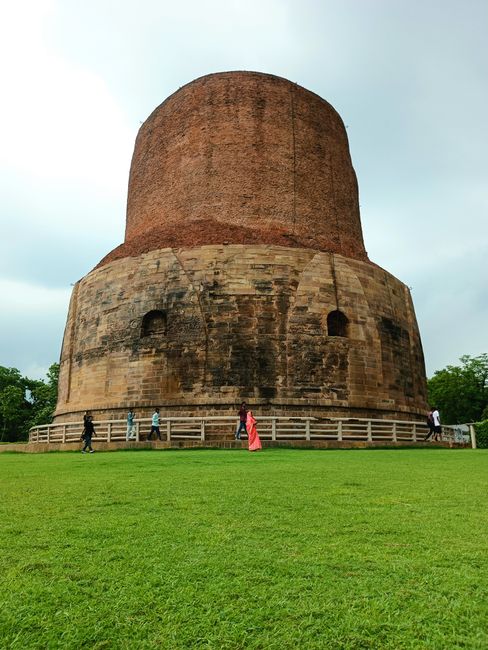
Explore the key sites, including the magnificent Dhamek Stupa, a massive stone and brick structure standing 43.6 metres tall, marking the spot of the Buddha’s sermon. Visit the Sarnath Archaeological Museum, which houses a rich collection of Buddhist artifacts, including the famous Lion Capital of Ashoka, which has been adopted as the National Emblem of India. You can also wander through the various monasteries built by different Buddhist countries, each with its unique architectural style. Sarnath flourished as a major Buddhist centre from the 3rd century BCE, under the patronage of Emperor Ashoka, until it was sacked in the 12th century CE, as documented by archaeological findings and historical records.
Photographically, focus on capturing the intricate architectural details of the stupas and monasteries, as well as the serene atmosphere that permeates this sacred site. The soft morning light is ideal for highlighting the textures of the ancient ruins.
Afternoon: Exploring Local Crafts and Cuisine
Return to Varanasi and immerse yourself in the local culture by visiting the bustling markets, where you can observe and photograph traditional crafts. Varanasi is famous for its silk weaving, and you can find exquisite Banarasi sarees known for their fine silk and opulent embroidery. Other notable crafts include wood carving and pottery.
Explore Thatheri Bazaar, known for its exquisite brassware, and Vishwanath Gali, a vibrant hub for textiles, religious items, and handicrafts. This is a great opportunity for candid photography, capturing the artisans at work and the vibrant commerce of the city.
No visit is complete without indulging in the local cuisine. Be sure to try the street food, but choose reputable food vendors with high hygiene standards to ensure a safe and enjoyable culinary experience. Sample local delicacies like kachori sabzi (a fried pastry with potato curry), chena dahi vada, and finish with a creamy, hand-churned lassi served in a traditional clay cup.
Evening: Classical Music or Dance Performance
Experience the rich cultural heritage of Varanasi by attending a classical music or dance performance. The city has been a major centre for music and the arts for centuries and is home to the Benares gharana, a specific style of Indian classical music. Look for performances featuring traditional instruments like the sitar, tabla, and shehnai, or classical dance forms like Kathak. These intimate concerts offer a soulful end to the day. For photographers, the low-light conditions are a challenge, but the opportunity to capture the grace and artistry of the performers, the intricate details of their costumes, and the captivating atmosphere of the performance is well worth the effort.
Day 3: Spirituality and Reflection
Your final day is for deeper spiritual connection and quiet reflection, allowing you to absorb the profound energy of the city before your departure.
Morning: Yoga or Meditation by the Ganges
Begin your day with a rejuvenating yoga or meditation session by the Ganges. The riverbank at sunrise provides a tranquil setting to connect with your inner self and the spiritual energy of the city. Many guesthouses and dedicated centres offer classes. Find a qualified yoga or meditation instructor or join a group session to enhance your experience. Practicing mindfulness in the serene and sacred environment of the Ganges is a powerful way to start your day, bringing a sense of peace and clarity.

Afternoon: Exploring the Ashrams and Spiritual Centers
Explore the numerous ashrams and spiritual centres in Varanasi, each offering a unique perspective on spirituality and self-discovery. These centres provide a quiet refuge from the city’s hustle and bustle. Visit the Bharat Mata Mandir (Mother India Temple), a unique temple that houses a massive relief map of the Indian subcontinent carved in marble, and the Anandamayi Ma Ashram, a centre dedicated to the teachings of the 20th-century female saint. These visits allow you to learn about the diverse teachings and practices of different spiritual traditions that coexist in this holy city.
Evening: Sunset Boat Ride and Farewell Dinner
Take a final boat ride on the Ganges to witness the breathtaking sunset, reflecting on your spiritual journey and photographic adventures. The light at this time of day is soft and warm, casting a golden glow on the ghats and the water. Capture the vibrant colours of the sky as the sun dips below the horizon. Afterwards, enjoy a farewell dinner at a rooftop restaurant overlooking the Ganges, savouring the flavours of Varanasi one last time and reminiscing about your unforgettable experience.

Practical Tips for Visiting Varanasi
To make your trip smoother and more enjoyable, keep these practical tips in mind.
- Best time to visit: The best time to visit Varanasi is during the cooler, dry winter months from October to March. The weather is pleasant and conducive to exploration.
- How to get around: Navigate Varanasi using a combination of cycle-rickshaws for short distances, auto-rickshaws and taxis for longer journeys, and boats for exploring the ghats. Walking is the only way to explore the narrow lanes of the old city.
- Accommodation options: Choose from a range of accommodation options, from budget-friendly guesthouses along the ghats offering incredible views to mid-range and luxurious hotels located a little further from the river.
- Safety precautions: Be aware of your surroundings and keep your valuables secure. Be wary of unsolicited offers from touts or guides. Politely but firmly decline any services you do not wish to use.
- Cultural etiquette: Respect local customs and traditions. Dress modestly, especially when visiting temples and other religious sites (cover your shoulders and knees). Always ask for permission before taking someone’s photograph, particularly during sensitive moments like religious rituals or at the cremation ghats.

Conclusion
Over three days, you’ve immersed yourself in the spiritual heart of Varanasi, captured its vibrant culture through photography, and experienced the timeless beauty of the Ganges. From the dawn rituals on the river to the evening aarti, from the ancient temples to the tranquil grounds of Sarnath, this journey offers a profound look into the soul of India. Varanasi offers a unique blend of spirituality and photographic opportunities, providing a transformative experience for travellers and artists alike. It is a city that challenges, inspires, and ultimately stays with you long after you leave. Plan your own journey to Varanasi and discover the magic of this ancient city for yourself.