How I Ran My Startup from the Himalayas: Challenges, Strategies, and Lessons Learned

The hum of a server rack, the relentless chatter of an open-plan office, the daily commute crushed between strangers, this is the accepted soundtrack of startup life. For years, it was mine too. My startup, a sustainable tech venture aimed at creating eco-friendly consumer electronics, was born in the heart of London. But as the company grew, I felt myself shrinking. The inspiration that sparked the idea was being drowned out by the noise. I needed a radical change. I needed silence, perspective, and a connection to the very nature our products were designed to protect. So, I packed up my life and my business, and moved to the Himalayas.
This isn’t just a story about remote work; it’s about running a tangible, growing business with a physical supply chain and a global team from one of the most remote, challenging, and breathtakingly beautiful places on Earth. It was a journey fraught with obstacles, from week-long internet outages to monsoon-induced landslides cutting off all contact. Yet, it was also the single most transformative decision I ever made, both for my company and for myself. This article is the blueprint of how I did it, the practical strategies, the hard-won lessons, and the unfiltered reality of trading the boardroom for a balcony overlooking the roof of the world.

Setting the Stage: Choosing the Himalayas as Your Base
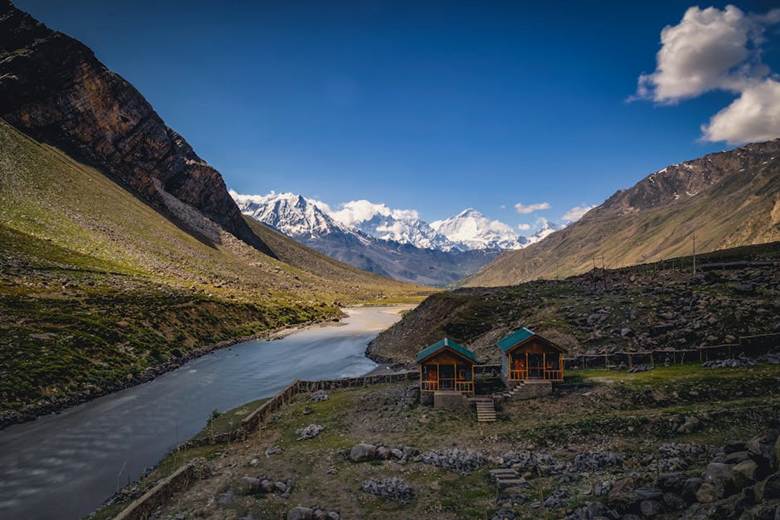
The idea of the Himalayas is romantic; the reality is logistical. My first step wasn’t to book a flight, but to spend three months in deep research. I wasn’t looking for a tourist town, but a place that balanced seclusion with a thread of connection to the outside world. I settled on a small village in Himachal Pradesh, India. It was accessible via a winding mountain road (most of the year), had a reputation for a friendly local community, and, crucially, was on the fringe of the national fibre optic network.
Setting up was an exercise in patience and resourcefulness. I rented a small, traditional stone-and-wood cottage and spent the first month making it a viable live/work space. This meant shipping essential tech, my primary computer, monitors, and networking gear via a specialised courier, a process that took six weeks and a mountain of customs paperwork. For everything else, I turned to the local community. A local carpenter built my desk from reclaimed wood, and the village electrician helped me understand the nuances of the local power grid.
Integrating into the community was as important as setting up my Wi-Fi. I made a conscious effort to learn basic Hindi, to shop at the local market, and to accept invitations for chai. This wasn’t just about being a good neighbour; it was a business necessity. When a power line went down or a delivery went missing, it was these personal relationships, not a customer service hotline, that solved the problem. My personal experience taught me that in a remote location, your greatest asset isn’t your technology, but your community.
Overcoming Connectivity and Technological Hurdles
In the Himalayas, the internet is not a utility; it’s a lifeline you have to build yourself. My research had identified a local provider offering a fibre connection, but “high-speed” here meant a fluctuating 10-20 Mbps on a good day. It was enough for emails and Slack, but high-definition video calls were a luxury. To ensure I was never completely cut off, I invested in a satellite internet system as a backup. The latency made it unsuitable for real-time conversation, but it was a godsend for downloading critical files during fibre outages.
Power was the next great challenge. The local grid was unreliable, with frequent cuts lasting hours. To run a tech company, I needed uninterrupted power. The solution was a robust solar power system. I installed several high-efficiency panels on my roof, connected to a battery bank that could power my entire workspace for up to 48 hours without sun. For the monsoon season, when grey skies could linger for days, I had a small, quiet petrol generator as a final backup. Maintaining this system became a new ritual, involving cleaning panels and monitoring battery levels.
I quickly learned to become my own IT support. When a connection drops, there’s no one to call. I learned to diagnose network issues, splice cables, and optimise my software for low-bandwidth environments. This meant disabling auto-updates, using text-only versions of websites, and scheduling large uploads for the dead of night when the network was least congested. I once spent an entire week offline during a critical funding negotiation due to a fibre cut caused by a landslide. It was terrifying, but it taught me the importance of having redundant systems and communicating potential delays to my team and stakeholders proactively.
Building and Managing a Remote Team Across Time Zones
Leading a team from a mountain top requires a fundamental shift in management philosophy. I couldn’t rely on physical presence, so I had to build a culture of extreme trust and clear communication. When hiring, I looked for people who were not only skilled but also highly independent, self-motivated, and comfortable with asynchronous communication.
Our entire workflow was built around tools like Asana for project management, Slack for daily communication, and Loom for recording video updates. This “asynchronous-first” approach meant that team members in different time zones could contribute effectively without needing to be online simultaneously. We had only two mandatory “sync” meetings per week, carefully scheduled to find a reasonable overlap between London, Himachal Pradesh, and our developer in California.
Fostering team cohesion was a deliberate act. We couldn’t grab a pint after work, so we created virtual alternatives. We had a dedicated Slack channel for non-work chat, shared photos of our weekends, and held monthly “virtual chai” sessions where we’d just talk about life. One of the most successful activities was a “workspace tour” where each team member gave a video tour of their home office. Seeing my view of the Himalayas and my colleagues’ setups in their city flats created a powerful sense of connection. It reminded us that we were all individuals united by a common goal, not just names on a screen.

Navigating Logistical and Supply Chain Challenges
Managing a physical product startup from a remote village presented a unique set of logistical puzzles. Every component we sourced and every product we shipped had to travel that single, winding mountain road. My first rule was to build redundancy into the supply chain. I maintained a three-month buffer of all essential components and packaging materials, stored in a cool, dry room in my cottage.
Shipping was a slow, deliberate process. I developed a strong relationship with the postmaster in the nearest town, who would hold packages for me and give me a heads-up on expected delivery times. For outbound shipments, I had to plan around the weather. During the monsoon season, from June to September, I communicated extended delivery times to our customers, framing it as part of the reality of our sustainable, mountain-based operation.
To reduce our reliance on long-distance shipping, I actively sought local partnerships. I worked with local artisans to create beautiful, handcrafted packaging from recycled materials, which not only supported the local economy but also became a unique selling point for our brand. This approach taught me a valuable lesson: your greatest limitations can often be reframed as your most unique strengths. A landslide once cut off the road for two weeks, delaying a major product shipment. It was a stressful period, but it forced us to improve our inventory management and communication strategies, making the business more resilient in the long run.

Maintaining Work-Life Balance and Personal Well-being
In a city, the commute creates a natural boundary between work and life. In a Himalayan cottage, that boundary is the ten steps from your bed to your desk. I had to create artificial boundaries to protect my mental health. My office was a dedicated corner of the main room, and I established a strict “end of day” ritual. At 6 p.m., I would close my laptop, put my work phone on silent, and physically leave the space to go for a walk.
The solitude was both a blessing and a curse. The silence was incredible for deep, focused work, but the isolation could be crushing. I combatted this by scheduling my life with the same discipline I applied to my work. This included daily meditation, journaling, and scheduled video calls with friends and family back home.
Most importantly, I leveraged my unique environment for my physical health. Instead of a gym membership, I had the entire Himalayan range. I started each day with a hike, breathing in the crisp mountain air. This daily dose of nature was not just exercise; it was a form of therapy that cleared my mind and gave me the perspective I had craved in London. I learned that work-life balance isn’t about a perfect 50/50 split; it’s about integrating life-giving activities into your daily routine to counteract the demands of work.
Financial Management and Sustainability in a Remote Startup
Running a startup from the Himalayas completely changed my financial perspective. While my personal living costs and office rent were drastically lower, other expenses were significantly higher. The satellite internet subscription, solar power system, and specialised shipping costs were substantial investments. I had to become meticulous with financial planning, tracking every rupee and forecasting expenses with allowances for unexpected logistical challenges.
When it came to seeking investment, I initially worried that my location would be seen as a liability. Instead, I framed it as a core part of our value proposition. We weren’t just a tech company; we were a resilient, sustainable venture with an incredibly low burn rate and a compelling story. I could demonstrate that our model was inherently lean and adaptable.
Sustainability was woven into the fabric of our operations, not just our products. We supported the local economy, used renewable energy, and designed our logistics to be as low-impact as possible. This commitment to genuine sustainability resonated with a growing number of conscious consumers and investors. My experience proved that you can build a financially viable business that is also ethically and environmentally responsible. The lower cost of living gave me a longer runway, allowing me to grow the company organically and choose investors who truly aligned with our mission.
Lessons Learned and Advice for Aspiring Remote Entrepreneurs
If I could distil this entire journey into a few key lessons, they would be these: resilience, simplicity, and community. You must be resilient enough to handle unforeseen challenges, from technical failures to natural disasters. You must embrace simplicity, stripping your business and life down to what is truly essential. And you must build a community, both online with your team and offline with your neighbours, because you cannot succeed in isolation.
For anyone considering a similar path, my advice is practical. First, do a trial run. Spend at least a month in your chosen location before committing. Second, over-invest in connectivity and power; they are the foundations of your business. Third, learn to be self-sufficient. You will be your own IT support, logistics manager, and HR department.
This experience has fundamentally reshaped me as an entrepreneur and as a person. It taught me that the conventional path is not the only path. It showed me that it is possible to build a successful, growing company while living a life of intention, purpose, and connection to the natural world. It has been the hardest and most rewarding journey of my life.
Conclusion
Trading the frantic energy of a city for the profound stillness of the Himalayas was more than a change of scenery; it was a complete re-engineering of my approach to business and life. The challenges were immense, demanding a level of planning, adaptability, and self-reliance I never knew I possessed. Yet, the rewards were immeasurable. The clarity gained from the solitude, the resilience forged in the face of adversity, and the deep connections built with my team and local community have become the cornerstones of my company’s culture.
This journey has proven to me that success doesn’t have to come with a city postcode. With careful planning, the right technology, and a powerful support system, it is possible to build a thriving global business from anywhere. It’s a testament to the idea that we can redefine our own metrics for success, creating ventures that not only grow financially but also enrich our lives and respect our planet.
If you’re dreaming of your own unconventional entrepreneurial journey, know that it is possible. It will test you, but it will also reward you in ways you can’t yet imagine. What is your remote work dream, or what is the biggest challenge holding you back? Share your thoughts in the comments below. I’d love to hear them.