
Hawa Mahal Jaipur
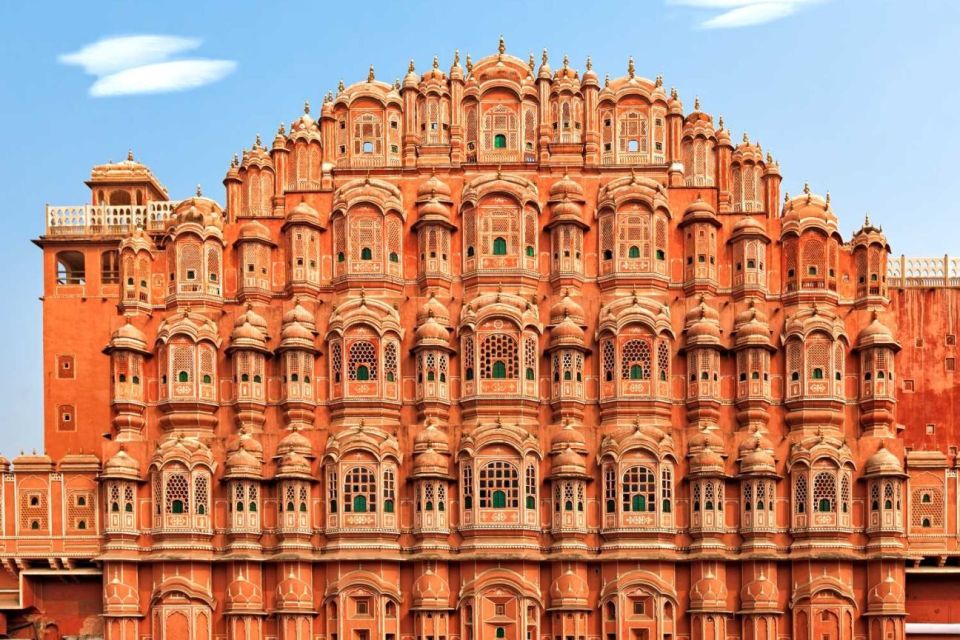
Hawa Mahal, renowned as the “Palace of Winds” or “Palace of Breeze,” stands as a pinnacle of attraction in Jaipur, the vibrant Pink City. Nestled amidst the bustling city market, it draws a multitude of visitors daily, ranging from locals to international tourists. This architectural marvel, with its five-storied facade, enhances the city’s famed red and pink hues.
Strategically located in the Badi Chaupad area, south of Jaipur, Rajasthan, Hawa Mahal is encircled by buildings and shops crafted in the city’s signature red and pink stone. Its proximity to significant landmarks like City Palace, Jantar Mantar, and Radha Krishna Temple adds to its allure. The palace’s prime positioning in the heart of the Pink City magnifies its significance, offering a splendid view of the bustling market below and vice versa, immersing passersby in the grandeur of Rajput architecture.
Constructed towards the end of the 18th century, in 1799, by Maharaja Sawai Pratap Singh, Hawa Mahal’s inception was inspired by the architectural elegance of Khetri Mahal in Jhunjhunu. Lal Chand Ustad, the celebrated architect, designed this unique structure, which is emblematic of the architectural ingenuity of that era. The palace’s design, influenced by Lord Krishna’s crown, showcases a foundation-less structure, making it the tallest of its kind.
Hawa Mahal’s distinctive architecture, a blend of Rajput and Mughal styles, is evident in its pink and red sandstone construction. The palace features 953 intricately designed windows (Jharokhas), facilitating ventilation and providing a secluded viewpoint for the royal ladies. These windows also allow cool breezes to permeate, offering relief during Rajasthan’s scorching summers.
The palace’s interior includes a courtyard with a fountain, surrounded by two-storied buildings. Access to the upper floors, housing the Prakash Mandir, Vichitra Mandir, and Hawa Mandir, is via ramps designed for the queens’ palanquins, a feature that highlights the palace’s thoughtful design catering to its royal inhabitants.
Additionally, the Hawa Mahal houses a museum that showcases paintings, artifacts, and royal paraphernalia, offering insights into the Rajputs’ rich cultural heritage. Open daily, the palace and its museum invite exploration, with a nominal entry fee that varies for Indian and foreign visitors, including discounted rates for students.
Located at Badi Chaupad, Pink City, Jaipur, the palace is easily accessible from major points within the city, with ample accommodation options nearby for visitors. Enhanced by mobile-friendly policies and photography permissions, the palace remains a must-visit, especially during the cooler months of October to March, when Rajasthan’s beauty can be fully appreciated.
Whether marveling at the morning sunlight filtering through its windows or enjoying the nighttime illumination, Hawa Mahal offers an unforgettable experience, embodying the essence of Jaipur’s royal heritage and architectural magnificence.