Unveiling Madhya Pradesh’s Rich Heritage: A Journey Through Timeless Wonders
Madhya Pradesh, often called the ‘Heart of India,’ is a treasure trove of historical monuments, ancient temples, and diverse cultural traditions that narrate a story spanning millennia. This vast state, nestled in the centre of the country, is not just a geographical core but also a cultural and historical one. From the Mauryas to the Mughals, and the Bundelas to the Marathas, several powerful dynasties have left their indelible mark on the region, shaping its architectural landscape and cultural identity. The result is a breathtaking tapestry of forts, palaces, temples, and prehistoric sites, each holding a unique chapter of India’s magnificent past.
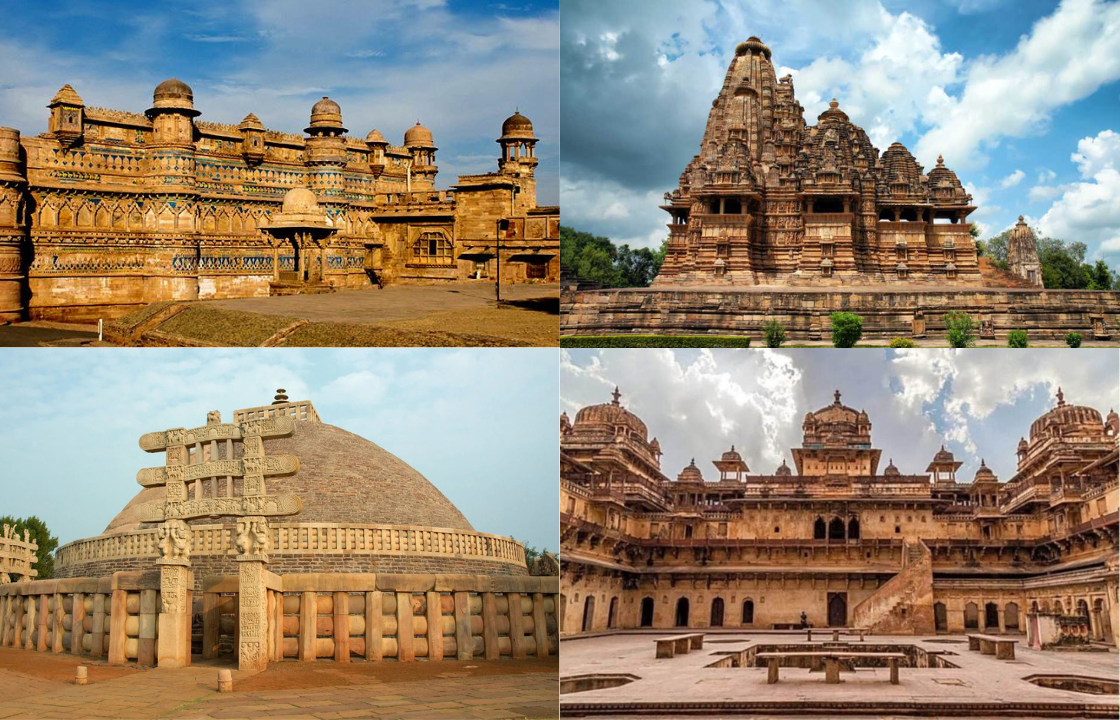
For the discerning traveller, the history enthusiast, or the spiritual seeker, Madhya Pradesh offers an unparalleled journey back in time. Its heritage is not confined to dusty museums but is alive in the very stones of its monuments and the vibrant art that adorns them. This article serves as your comprehensive guide to exploring some of the most captivating heritage sites in Madhya Pradesh, offering a glimpse into the state’s glorious past. We will journey from the serene Buddhist stupas of Sanchi and the prehistoric art of Bhimbetka to the celebrated temples of Khajuraho and the formidable forts of Gwalior and Orchha. Prepare to be enthralled by the stories, artistry, and timeless grandeur that await in the heart of India.
Sanchi Stupa: A Beacon of Buddhist Art and Architecture
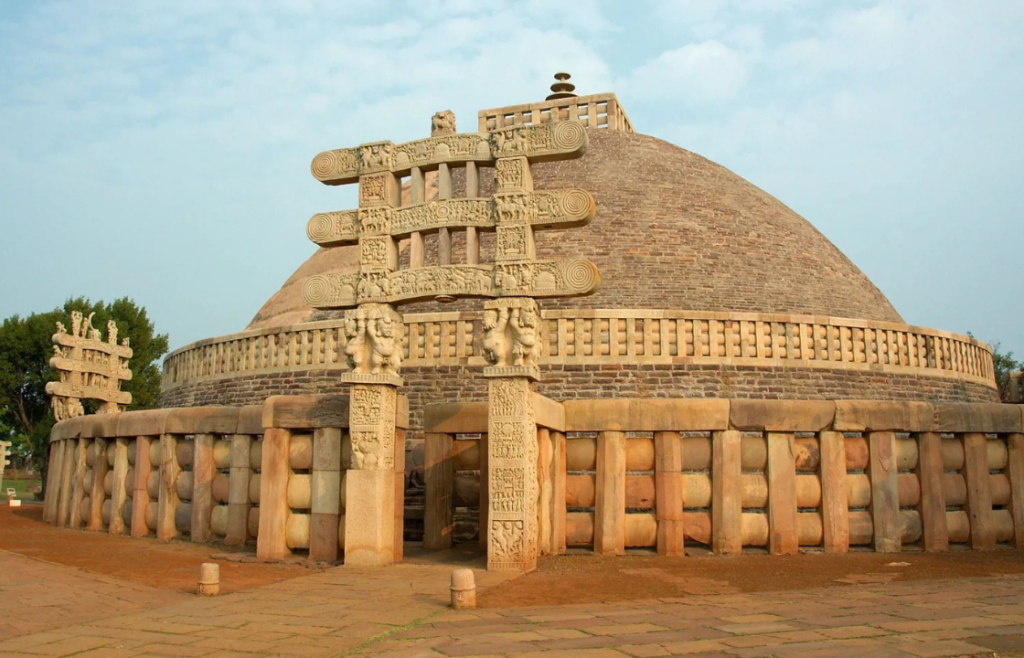
The Sanchi Stupa, a UNESCO World Heritage Site, stands as a profound testament to India’s rich Buddhist heritage and the monumental artistic achievements of the Mauryan period. Located atop a peaceful hill about 46 kilometres from Bhopal, this magnificent structure is not just a monument but a symbol of peace, faith, and the enduring legacy of Emperor Ashoka’s conversion to Buddhism. Its serene atmosphere and architectural splendour draw pilgrims and history lovers from across the globe.
Originally commissioned by the Mauryan Emperor Ashoka in the 3rd century BCE, the Great Stupa (Stupa No. 1) has undergone several expansions and renovations over the centuries. Ashoka, after the bloody Kalinga war, embraced Buddhism and dedicated his life to its propagation. He had the original brick stupa built over the relics of the Buddha. In the subsequent centuries, particularly under the Shunga and Satavahana dynasties, the stupa was encased in stone, enlarged to its present dimensions, and the ornate gateways were added.
The most remarkable features of the Sanchi complex are the four intricately carved gateways, or toranas, that adorn the entrances to the Great Stupa. These gateways, erected in the 1st century BCE, are masterpieces of narrative art. They depict scenes from the life of the Buddha and the Jataka tales—stories of his previous incarnations—offering a visual narrative of Buddhist teachings and folklore.
Symbolic Representations: Interestingly, the Buddha is never depicted in human form in these early carvings, a common practice in early aniconic Buddhist art. Instead, his presence is indicated by symbols such as the Bodhi tree (representing his enlightenment), a wheel (representing his teachings or Dharma), an empty throne, or footprints.
Key Narratives: The carvings of the Great Departure depict Prince Siddhartha leaving his palace in search of enlightenment. Other panels illustrate the story of the six-tusked elephant from the Chhaddanta Jataka, the siege of Kushinagar, and Emperor Ashoka’s visit to the Bodhi tree. Each panel is a marvel of detailed craftsmanship, bringing these ancient stories to life.
The main stupa is surrounded by a constellation of smaller stupas, temples (chaityas), and monasteries (viharas), which further enhance the site’s significance as a major centre of Buddhist learning and monastic life for over a thousand years. The Archaeological Survey of India (ASI) has meticulously maintained the site, and the adjacent museum houses a collection of artefacts found during excavations, including the famous Ashokan lion capital.
Practical Information for Visitors: Sanchi Stupa is open to visitors daily from sunrise to sunset. It is easily accessible by road and rail from Bhopal, the state capital. To fully appreciate the intricate details, it is advisable to hire a licensed guide or use an audio guide available at the site.
Khajuraho Temples: A Celebration of Art and Eroticism
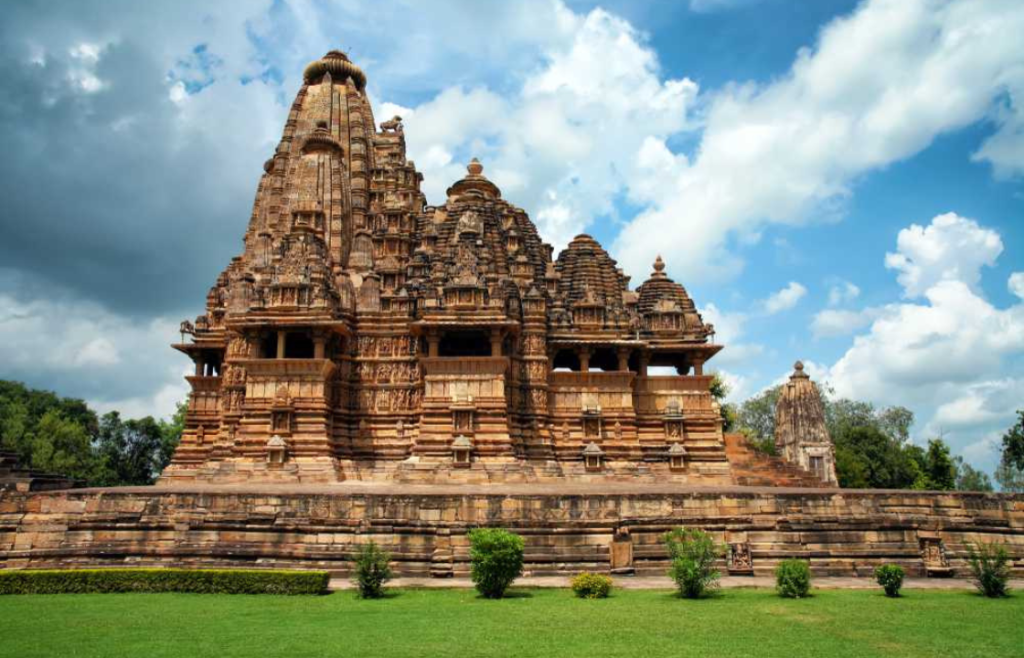
The Khajuraho Group of Monuments, another of Madhya Pradesh’s esteemed UNESCO World Heritage Sites, are celebrated globally for their exquisite Nagara-style architecture and the captivating, intricate sculptures that adorn their walls. These temples are not merely places of worship but a canvas that portrays a vivid picture of life, spirituality, and philosophy from a millennium ago.
Built by the powerful Chandela dynasty between the 9th and 11th centuries, these temples showcase the artistic prowess and cultural sophistication of the period. Originally a complex of over 85 temples, only about 25 remain today, clustered into Western, Eastern, and Southern groups. The Western Group is the most famous and contains the largest and most significant temples.
The temples are most famous for their explicit and erotic sculptures, which have often been the subject of fascination and speculation. It is crucial to understand their cultural context. These sculptures are believed to represent various aspects of human life and spirituality, including the pursuit of kama (desire or pleasure) as one of the four legitimate goals of human life in Hindu philosophy.
Addressing Misconceptions: Contrary to popular belief, the erotic sculptures are not merely depictions of sexual acts but are often interpreted as symbolic representations of cosmic union, fertility, and the cycle of life. Some scholars suggest they have a connection to Tantric practices, which view the physical union as a path to spiritual enlightenment. It is also important to note that these sculptures make up only about 10% of the total carvings on the temples; the rest depict mythological figures, celestial beings (apsaras), warriors, animals, and scenes of daily courtly life.
Artistic and Symbolic Value: The true marvel of Khajuraho lies in the dynamism and grace of its sculptures. The figures are full of life and movement, their expressions and postures captured with incredible skill. They stand as a testament to the Chandela rulers’ patronage of the arts and their liberal and sophisticated worldview.
The temples’ architectural features are a perfect example of the Nagara style. They are typically built on a high platform (jagati) and feature a towering spire (shikhara) that rises in a curve, symbolising the mythical Mount Meru, the abode of the gods. The main halls (mandapas) are intricately carved, leading to the inner sanctum (garbhagriha), where the principal deity is housed.
The most prominent temples within the complex include the Kandariya Mahadeva Temple, dedicated to Lord Shiva, which is the largest and most ornate temple in the complex. Its main spire soars to a height of 31 metres. The Lakshmana Temple, dedicated to Lord Vishnu, is renowned for its well-preserved sculptures and intricate carvings that cover almost every inch of its surface.
Practical Information for Visitors: The best time to visit Khajuraho is during the cooler winter months, from October to March. The annual Khajuraho Dance Festival, held in February against the backdrop of the illuminated temples, is a spectacular cultural event. The town is well-connected by air, rail, and road, with numerous hotels and guesthouses available to suit various budgets.
Gwalior Fort: A Citadel of History and Architectural Grandeur
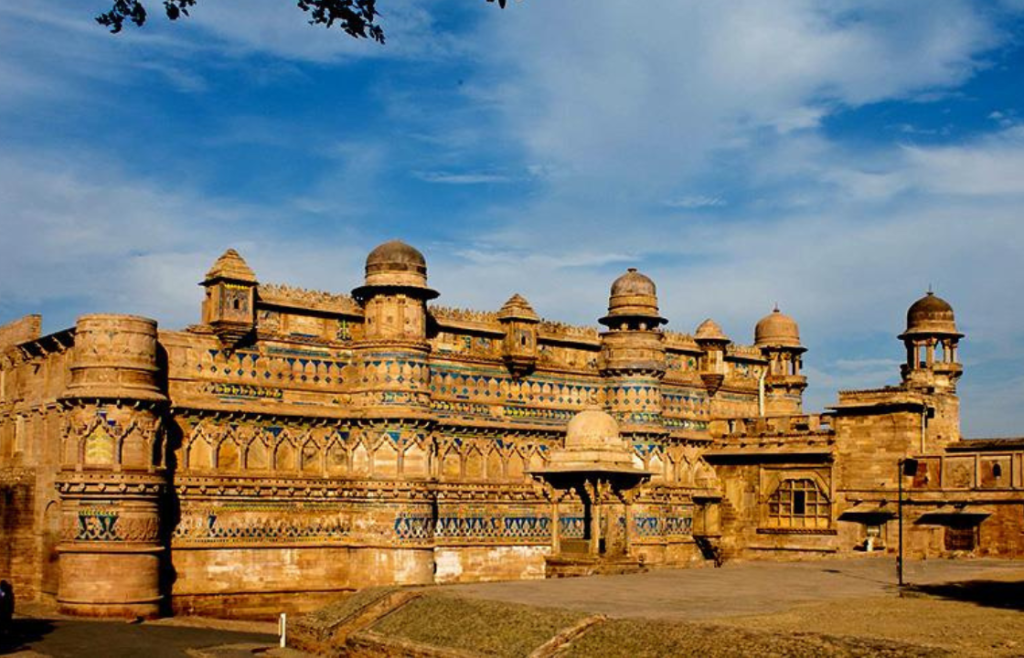
Gwalior Fort, perched majestically atop a steep, rocky hill, is a formidable citadel that has witnessed centuries of Indian history and showcases a brilliant blend of architectural styles. Often referred to as ‘the pearl amongst the fortresses of Hind’ by the Mughal emperor Babur, this sprawling fort complex has been the stage for epic battles, royal intrigue, and artistic flourishing for over a thousand years.
The fort’s history is long and storied, having been ruled by various dynasties, including the Tomars, the Mughals, the Marathas, and the Scindias, each leaving their indelible imprint on its architecture and cultural heritage. Its strategic location made it one of the most invincible forts in India.
The fort complex is a treasure trove of historical monuments. The major attractions within its walls include:
Man Singh Palace: Built by Raja Man Singh Tomar in the 15th century, this palace is a masterpiece of early Hindu and Rajput architecture. Its exterior is adorned with vibrant blue, yellow, and green ceramic tiles, forming patterns of ducks, elephants, and peacocks. Its intricate latticework and colourful tilework make it one of the most visually stunning structures in the fort.
Gujari Mahal: This palace was also built by Man Singh Tomar for his beloved queen, Mrignayani. Today, it houses an archaeological museum with a remarkable collection of sculptures and artefacts from the region, including the famous Shalabhanjika Yakshi statue.
Teli ka Mandir: This temple is one of the oldest structures in the fort and is architecturally unique. It features a towering Dravidian-style roof (common in South India) atop a North Indian Nagara-style base, standing as a testament to the cultural exchange and synthesis of artistic ideas across different regions of India.
Saas-Bahu Temples: Contrary to what their name suggests (mother-in-law/daughter-in-law), these 11th-century temples are dedicated to Lord Vishnu. The name is likely a corruption of ‘Sahastrabahu,’ meaning ‘the one with a thousand arms,’ another name for Vishnu. They are adorned with exquisite carvings.
On my first visit, the sheer scale of the fort was overwhelming. Walking through the Man Singh Palace, I could almost hear the echoes of history, a feeling that a photograph can never truly capture. It’s a place that demands to be experienced, to be felt in the cool stone of its corridors and the panoramic views from its ramparts.
Another awe-inspiring feature of Gwalior Fort is the series of colossal Jain sculptures carved into the rock face on the approach to the main gate. Known as the Gopachal Parvat rock-cut Jain monuments, these figures of the Tirthankaras, some reaching over 17 metres in height, were carved in the 15th century and represent the region’s significant Jain heritage.
Practical Information for Visitors: A captivating sound and light show is held every evening at the Man Singh Palace, narrating the fort’s dramatic history. Guided tours are highly recommended to navigate the vast complex and gain a deeper understanding of its significance.
Explore the Majestic Gwalior Fort: A Journey Through Power, Art, and Resilience
Explore the majestic Gwalior Fort and step back in time to witness the grandeur of Indian history and architecture. It is a journey through power, art, and resilience.
Orchha: A Medieval Town Frozen in Time
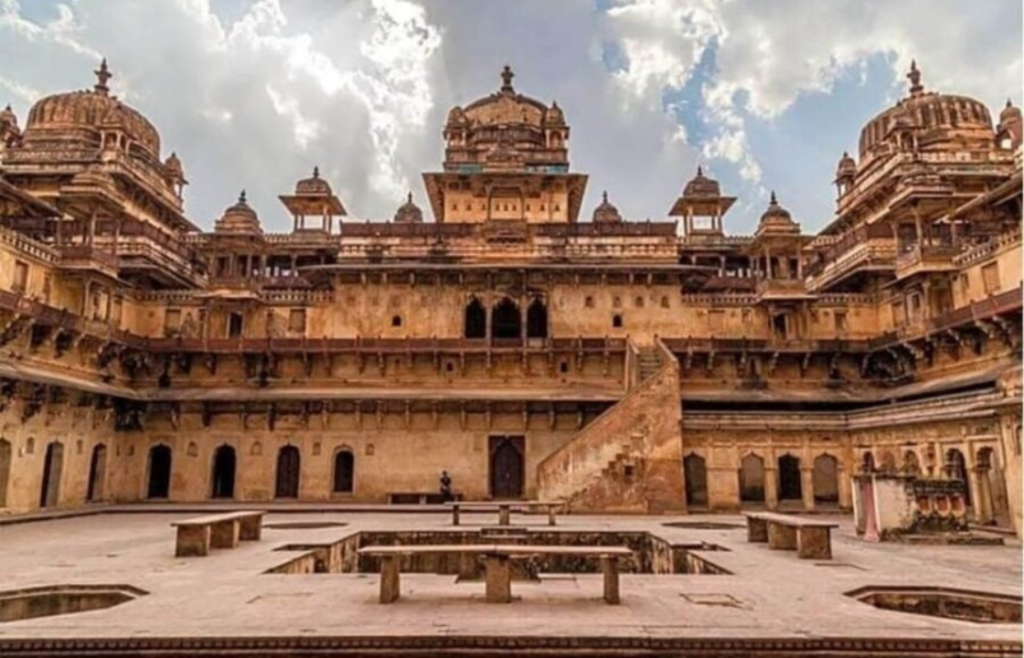
Orchha, a hidden gem nestled on the banks of the serene Betwa River, is a captivating medieval town that seems to have frozen in time. Its landscape is dominated by majestic palaces, ancient temples, and royal cenotaphs, all telling the story of its glorious past as the capital of the Bundela Rajputs. Unlike the bustling tourist hubs, Orchha offers a more tranquil and immersive historical experience.
Founded by the Bundela Rajput chief Rudra Pratap Singh in the 16th century, Orchha flourished as a centre of art, culture, and architecture. The Bundelas were great patrons of the arts, and their legacy is evident in the stunning monuments that dot the town.
The major attractions in Orchha are clustered together, making it easy to explore on foot. The highlights include:
Orchha Fort Complex: This complex houses the town’s most significant palaces. The Raj Mahal, built by Madhukar Shah, is known for its breathtaking murals. These vibrant paintings adorn the walls and ceilings, depicting scenes from Hindu mythology, particularly the Ramayana, and showcasing the religious beliefs and artistic traditions of the Bundela dynasty.
Jehangir Mahal: This spectacular palace was built by Bir Singh Deo in the 17th century to honour the visit of the Mughal Emperor Jehangir. It is a remarkable example of Indo-Islamic architecture, blending Rajput and Mughal styles seamlessly. Its towering domes, delicate latticed windows (jalis), and ornate balconies offer stunning views of the surrounding landscape.
Ram Raja Temple: This is one of the most unusual temples in India. It was originally a palace that was converted into a temple. Here, Lord Rama is worshipped not just as a god but as a king (Raja). The temple has a unique daily ritual where armed guards present a gun salute to the deity.
A short walk along the Betwa River leads to one of Orchha’s most iconic sights: the royal cenotaphs, or chhatris. These fourteen memorials to the Bundela rulers stand in a row along the riverbank, their spires reflected in the calm waters. They showcase a unique blend of temple and mosque architectural styles and are best viewed at sunrise or sunset when the light casts a magical glow upon them.
Practical Information for Visitors: The best way to explore Orchha is on foot, allowing you to soak in its medieval charm at a leisurely pace. The town is easily accessible from Jhansi, a major rail hub. Nearby attractions include the Laxminarayan Temple, known for its well-preserved murals.
Source: The official Madhya Pradesh Tourism website offers detailed guides and historical context for planning your visit.
Discover the enchanting town of Orchha and immerse yourself in its timeless beauty and historical charm. It is a place where every stone has a story to tell, and the past feels palpably present.
Bhimbetka Rock Shelters: A Window to Prehistoric Art
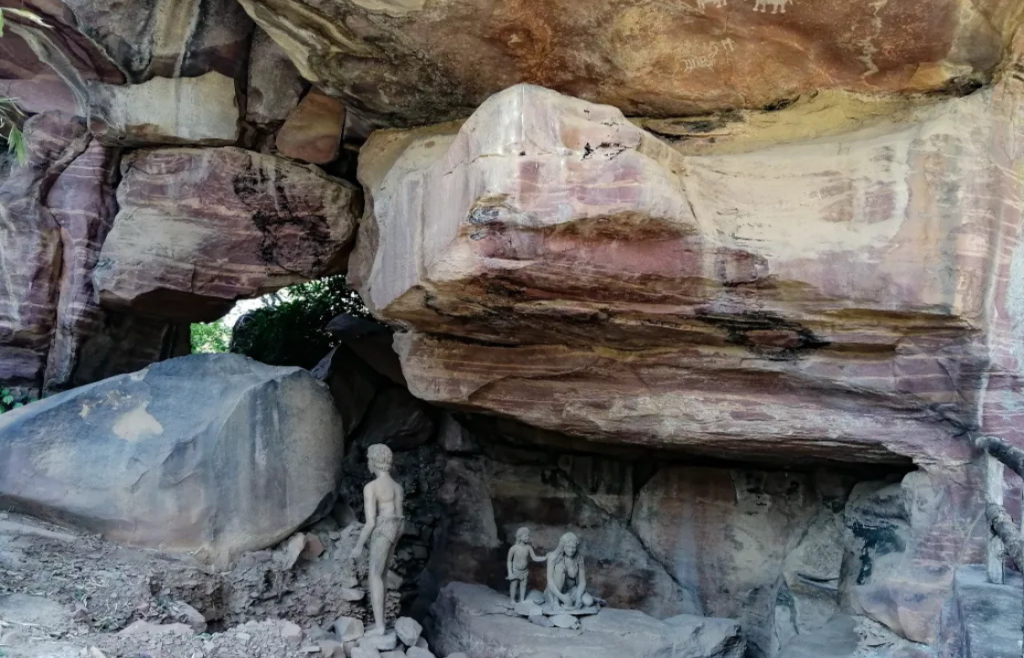
The Bhimbetka Rock Shelters, a UNESCO World Heritage Site located within the Ratapani Wildlife Sanctuary, offer a fascinating and unparalleled glimpse into the prehistoric art and early human settlements in India. These natural sandstone caves and shelters served as a canvas for our earliest ancestors, preserving a record of their lives, beliefs, and environment that dates back thousands of years.
Discovered by archaeologist Dr. V. S. Wakankar in 1957, these rock shelters contain a treasure trove of rock paintings. The paintings date from the Upper Palaeolithic and Mesolithic periods right through to the Chalcolithic, early historic, and medieval periods, providing an extraordinary continuous sequence of human culture. They provide invaluable insights into the lives and artistic expressions of early humans.
The paintings, created using natural pigments, depict a wide variety of subjects, offering a visual narrative of prehistoric human culture.
Themes and Styles: The earliest paintings are linear representations in green and dark red, often depicting large animals like bison, tigers, rhinoceroses, and boars. Later Mesolithic paintings are smaller and more detailed, showing scenes of community life, including hunting, childbirth, dancing, and religious rituals. These scenes provide evidence of the development of social structures and the use of early tools and weapons like bows, arrows, and spears.
Significance of the Paintings: The depictions of animals provide crucial information about the fauna of the region during that era. The hunting scenes illustrate the techniques and collaborative efforts of early humans, while the scenes of dancing and rituals suggest the beginnings of spiritual and communal beliefs.
The surrounding landscape, with its dense forests, perennial water sources, and rich flora and fauna, played a crucial role in the survival and development of these early human communities. The location of the shelters itself is strategic, offering protection from the elements and a vantage point over the surrounding plains. Walking through these ancient shelters, one can’t help but feel a profound connection to the dawn of human creativity.
Practical Information for Visitors: The best time to visit Bhimbetka is during the cooler and drier winter months (October to March). Given the historical and archaeological significance of the paintings, it is highly recommended to hire a guide to help interpret the different layers of art and understand their context.
Source: The UNESCO World Heritage Centre and the Archaeological Survey of India (ASI) provide authoritative information on the site’s history and preservation.
Journey back in time and witness the artistic legacy of prehistoric humans at the Bhimbetka Rock Shelters. It is a humbling experience that reminds us of the deep roots of human culture and our innate drive for artistic expression.
Conclusion
From the serene, ancient stupas of Sanchi and the prehistoric canvases of Bhimbetka to the celebrated temples of Khajuraho and the majestic forts of Gwalior and Orchha, Madhya Pradesh offers a diverse and profound range of heritage sites that showcase its rich cultural legacy. Each site is a chapter in a grand historical narrative, revealing the artistic genius, spiritual depth, and political power of the civilizations that have called this land home. This journey through the heart of India is more than just sightseeing; it is an education in history, art, and the enduring spirit of human creativity.
It is our collective responsibility to approach these invaluable sites with respect and to support efforts to preserve and promote them. By engaging in responsible tourism, we ensure that future generations can also appreciate and learn from their immense historical and cultural significance. The stories etched in the stones of Madhya Pradesh are a vital part of our shared human heritage.
Embark on a journey to Madhya Pradesh and discover the hidden gems that await you, each offering a unique glimpse into the state’s glorious past. Whether you are a historian, an artist, a pilgrim, or simply a curious traveller, the timeless wonders of this state will leave an indelible mark on your soul.
Share your favourite heritage sites in Madhya Pradesh in the comments below and inspire others to explore the state’s cultural treasures.
References
- Archaeological Survey of India (ASI). Official Website. https://asi.nic.in/
- Madhya Pradesh Tourism. Official Website. https://www.mptourism.com/
- UNESCO World Heritage Centre. Official Website. https://whc.unesco.org/
- Youtube videos : https://youtube.com/shorts/2A5UGtYpOQA?si=uyx9bxXl4xhxe3pc